
If you want the short answer, the AMD Ryzen 7 9800X3D is the best CPU for gaming for most people in 2026. It keeps high-end graphics cards fed with frames, it runs cooler than its Intel rivals, and it costs far less than AMD’s flagship chips. But “best” depends on your budget, your graphics card, and whether you’re building from scratch or upgrading an older PC. This guide covers picks at every price, plus the things worth checking before you spend money.
The figures in this guide are based on independent benchmark testing from respected hardware reviewers, using data published in early October 2026. Retail prices move quickly, especially around big sale events, so treat the numbers here as a snapshot and check the current price before you buy.
Quick Picks at a Glance
| Category | CPU | Cores / Threads | Typical Price* |
|---|---|---|---|
| Best overall | AMD Ryzen 7 9800X3D | 8 / 16 | ~$410–$480 |
| Fastest gaming chip | AMD Ryzen 7 9850X3D | 8 / 16 | ~6% above the 9800X3D |
| Best no-compromise | AMD Ryzen 9 9950X3D2 | 16 / 32 | ~$890 |
| Best Intel pick | Intel Core Ultra 7 270K Plus | 24 / 24 | ~$320 |
| Best mid-range (mixed use) | Intel Core Ultra 5 250K Plus | 18 / 18 | ~$220 |
| Best mid-range (games only) | AMD Ryzen 5 7600X3D | 6 / 12 | ~$240 |
| Best budget | AMD Ryzen 5 7600X | 6 / 12 | ~$150–$165 |
| Best for DDR4 | AMD Ryzen 7 5800X3D | 8 / 16 | ~$340 |
*Street prices in early October 2026. They change often.
Best CPU for Gaming Overall: AMD Ryzen 7 9800X3D
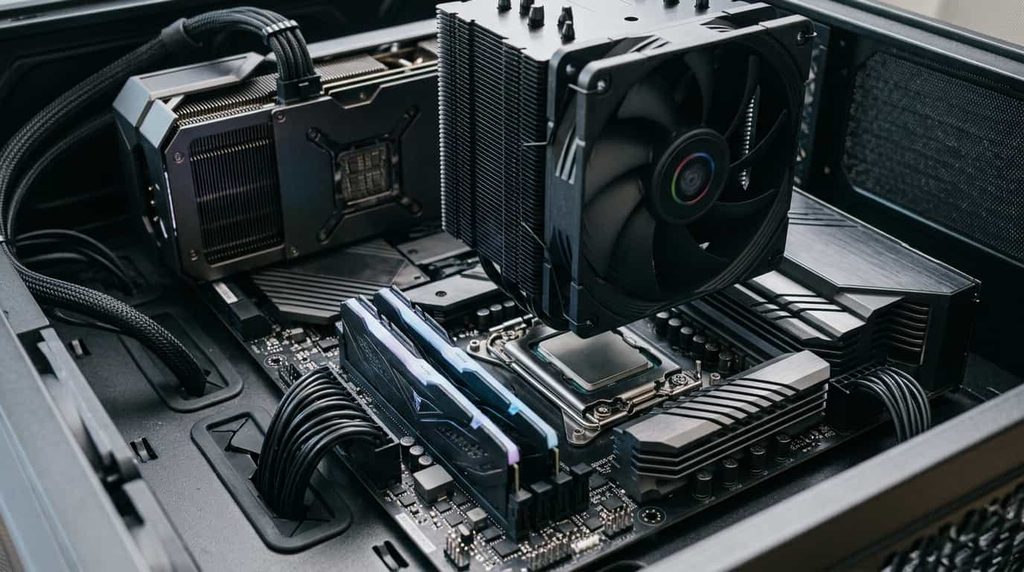
Games love cache. The 9800X3D stacks a large slab of extra L3 cache (96MB total) beneath its eight Zen 5 cores, so the processor spends less time waiting on system memory. The chip runs at 4.7GHz base and boosts to 5.2GHz, with a 120W TDP.
The results are lopsided. In Tom’s Hardware’s test suite, it beat Intel’s Core i9-14900K by roughly 30% and the Core Ultra 9 285K by around 35%. It also posts excellent 1% low frame rates, which is the number that tells you how smooth a game feels when things get busy. If you’ve ever noticed stutter during a chaotic fight even though your average FPS looked fine, that’s what the 1% lows capture.
Efficiency is the other selling point. The chip draws much less power than comparable Intel parts and responds well to undervolting through AMD’s Curve Optimizer. A cooler-running processor means you can get away with a cheaper motherboard, a smaller power supply, and quieter fans.
There are two caveats:
- Productivity: Similarly priced Intel chips with more cores win in rendering and heavy multitasking.
- Resolution: The cache advantage shrinks at 4K, where your graphics card is doing most of the work.
What about the Ryzen 7 9850X3D? It’s the new speed champion, but only barely. It’s about 3.3% faster on average while costing roughly 6% more. Unless you find the two priced almost identically, the 9800X3D is the smarter buy.
Best CPU for Gaming With No Budget Limit: Ryzen 9 9950X3D2
AMD’s Ryzen 9 9950X3D2 is the first chip to put 3D V-Cache on both of its compute dies, for 192MB of L3 in total. It has 16 cores and 32 threads, boosts up to 5.6GHz, and is rated at 200W.
Here’s the honest part: in games, it effectively ties the 9800X3D at 1080p. What the extra money buys is workstation muscle. Multithreaded performance is about 4% ahead of the regular 9950X3D, and some data-science workloads see gains of around 26%. It launched at $1,000 and now sells for roughly $890.
Buy it if you game and also edit video, render 3D scenes, or compile large projects, and you want one chip that does everything. If you mostly play games, put that money toward a better graphics card.
Best Intel CPU for Gaming: Core Ultra 7 270K Plus
Intel’s Arrow Lake Refresh chips are the company’s real comeback in gaming. The Core Ultra 7 270K Plus has 24 cores (8 performance, 16 efficiency), costs about $320, and has dipped to the $230s during sales.
In games it lands about 2.4% ahead of the Ryzen 7 9700X. AMD’s older Ryzen 7 7800X3D is still around 10% faster, but it runs $50 to $80 more. Where the 270K Plus really pulls away is multithreaded work, where it competes with chips costing far more. Intel’s Binary Optimization Tool (iBOT) can add around 8% in supported games, though the list of supported titles is still short.
The downsides are power draw, which is considerably higher than AMD’s, and the LGA 1851 socket, which is on its way out. Buying into it now means you probably won’t get another generation of upgrades.
If you’d rather have a cool, easy-to-run alternative, the Ryzen 7 9700X (roughly $250 to $305) has a 65W TDP and games about as well as the 14900K.
Best Mid-Range Gaming CPUs: Core Ultra 5 250K Plus and Ryzen 5 7600X3D
This is where most builders should look if they’re pairing a CPU with a mid-range or upper-mid-range graphics card. Two chips stand out, and the right one depends on what else you do with your PC.
Intel Core Ultra 5 250K Plus (~$220). It has six performance cores and twelve efficient cores, and in gaming it matches AMD’s Ryzen 5 9600X, coming in about 1% ahead at 1080p. In multithreaded apps it more than doubles the Ryzen’s score. For a PC that games, streams, and handles school or work tasks, that’s a lot of capability for the price. The catch is the same dead-end socket as the 270K Plus.
AMD Ryzen 5 7600X3D (~$240). It’s about 4.5% slower than the 7800X3D in games and typically pulls only around 65W while playing. That’s remarkable efficiency for the frame rates you get. It’s a 6-core chip with a locked multiplier, so it’s weaker outside of games, and the Intel chip is more than twice as fast in heavily threaded work. But if games are 90% of what you do, it’s the best value in the lineup, and it sits on AM5, which should be the longer-lived platform.
Best Budget CPU for Gaming: Ryzen 5 7600X
At roughly $150 to $165, the Ryzen 5 7600X is a smart starting point for a lean AM5 build. It delivers about 90% of the Ryzen 5 9600X’s performance for 94% of the price, which makes it slightly worse value on paper but a very good deal when it goes on sale. The catch: it needs DDR5 memory, which isn’t cheap right now.
If you already own an AM4 motherboard and DDR4 RAM, the Ryzen 5 5600 (about $110 to $135) is the budget play. It comes with a cooler in the box and performs well for its age. Just know that AM4 is at the end of its life, so there isn’t much room to upgrade later.
Best for DDR4 Systems: Ryzen 7 5800X3D
The 10th Anniversary Edition of the Ryzen 7 5800X3D (about $340) is a re-release of the cult favorite, and it’s still the fastest gaming CPU you can run on DDR4. If you own an AM4 board and a DDR4 kit, dropping this chip in is one of the cheapest big upgrades available.
For a brand-new build, though, think twice. Testing showed that even a single stick of DDR5 can outrun dual-channel DDR4 in games, so starting fresh on AM5 gives you more headroom, assuming you can stomach current memory prices.
No Graphics Card Yet? Try the Ryzen 5 8600G
For a stopgap build with integrated graphics, the Ryzen 5 8600G (around $190) handles light 1080p gaming and comfortable 720p. It’s not a substitute for a dedicated GPU, but it works well for esports titles and older games while you save for one.
How to Choose the Best CPU for Gaming
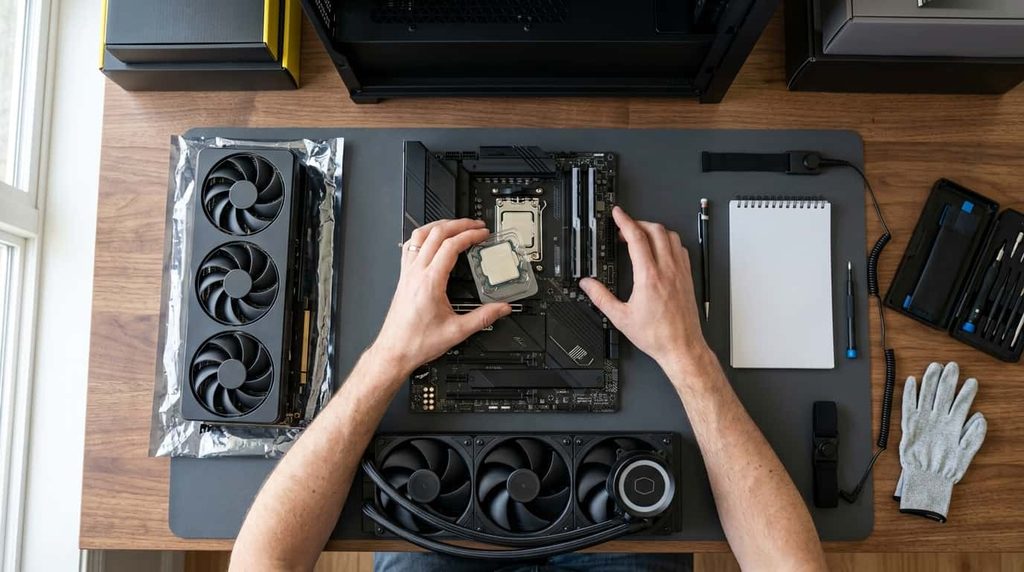
Reading benchmark charts only gets you so far. A few practical checks will keep you from overspending or buying the wrong thing.
Match the CPU to your graphics card and screen. At 1080p and 1440p with a powerful GPU, the processor is often what limits your frame rate, so it matters. At 4K, the graphics card does most of the heavy lifting, and a $220 CPU can land within a few percent of a $480 one. If you play competitive shooters on a high-refresh monitor, CPU speed matters more.
Don’t pay for cores you won’t use. Eight cores are plenty for gaming, and returns drop off sharply beyond that. A 16-core chip only makes sense if you have other heavy workloads.
Look at the whole platform, not just the chip. Memory and storage prices have climbed hard in 2026, and DDR5 is near a peak. When you’re coming from an older socket, you’ll be buying a new motherboard and RAM along with the processor, so price the full set before committing.
Budget for a proper CPU cooler. Most of the chips on this list, including the Ryzen 7 9700X and Intel’s K-series, don’t come with a cooler in the box. The efficient AMD picks, such as the 9800X3D and 7600X3D, are happy with a decent tower air cooler. Intel’s Ultra 7 270K Plus has a 250W peak rating, so it’s worth stepping up to a stronger air cooler or a 280mm or 360mm liquid cooler to keep clock speeds steady. Whichever you choose, check that it fits your case and supports your socket.
If you want to dig into the raw numbers behind these rankings, Tom’s Hardware also maintains a CPU benchmark hierarchy that compares dozens of processors in one place.
Should You Wait for Nova Lake or Zen 6?
Both AMD and Intel are expected to launch new consumer platforms toward the end of 2026 or in early 2027. Intel’s Nova Lake has been described by the company as one of its most important launches ever, and AMD’s Zen 6 desktop chips are expected to follow the same rough timeline. For the rest of this year, major new releases look unlikely.
So what should you do? If your current PC runs the games you play without trouble, waiting is reasonable. If you need an upgrade now, a Ryzen 7 9800X3D or Core Ultra 5 250K Plus won’t suddenly feel slow when new chips arrive. Just keep in mind that new platforms often launch with expensive motherboards, and you should confirm socket compatibility before assuming a new chip will fit an older board.
Frequently Asked Questions
Is AMD or Intel better for gaming in 2026?
AMD currently leads, particularly with its X3D chips. Intel’s Arrow Lake Refresh processors have closed much of the gap at lower prices and offer better multitasking performance, so Intel makes sense if you game and do heavy work on the same machine.
How many CPU cores do I need for gaming?
Six cores handle most games well, and eight is the comfortable sweet spot. Beyond that, extra cores mostly help with video editing, streaming, and other non-gaming tasks.
Do I need a 3D V-Cache (X3D) processor?
Not always. X3D chips deliver the biggest gains at lower resolutions and in cache-hungry games, but they cost more and the advantage fades at 4K. If you play at 4K with a mid-range GPU, a cheaper chip will feel nearly identical.
Can a CPU bottleneck my graphics card?
Yes. A weak processor can stop a strong graphics card from reaching its full frame rate, especially at 1080p. Pairing a flagship GPU with a bargain CPU is the most common way people leave performance on the table.
Final Thoughts
For most people hunting for the best CPU for gaming right now, the Ryzen 7 9800X3D is the safest bet: fast, efficient, and far better value than AMD’s pricier flagships. If your budget is tighter, the Core Ultra 5 250K Plus and the Ryzen 5 7600X3D give you excellent frame rates for around $220 to $240, and the choice between them comes down to whether you also need strong productivity performance. Whatever you pick, remember that the CPU is only one part of the equation. A balanced build with enough fast memory, a capable graphics card, and a good CPU cooler will always beat a flagship processor held back by weak parts.
1 thought on “Best CPU for Gaming: Top Picks for 2026”